When people picture a "college DJ," they usually picture one of two things: a student behind a radio board at 2 a.m. playing records nobody else will, or someone rocking a packed house party until the lights come on. The truth is that both are the same tradition. A college DJ is whoever decides what a campus hears — whether that is through a transmitter or a pair of speakers in a sweaty basement. This is a look at three generations of that role, starting where most students actually encounter it first: the party.
Where the campus actually hears it first
Before streaming flattened everything into playlists, the mixtape was how music moved on a college campus. Platforms like LiveMixtapes turned regional DJs into kingmakers — the DJ who hosted the hottest tape was the DJ who decided what the party, the dorm, and the parking lot were playing that semester. This was curation with immediate stakes. If the crowd didn't move, you knew within eight bars.
DJ RallyLiveMixtapes era · Indiana University party circuit · Bloomington, IN
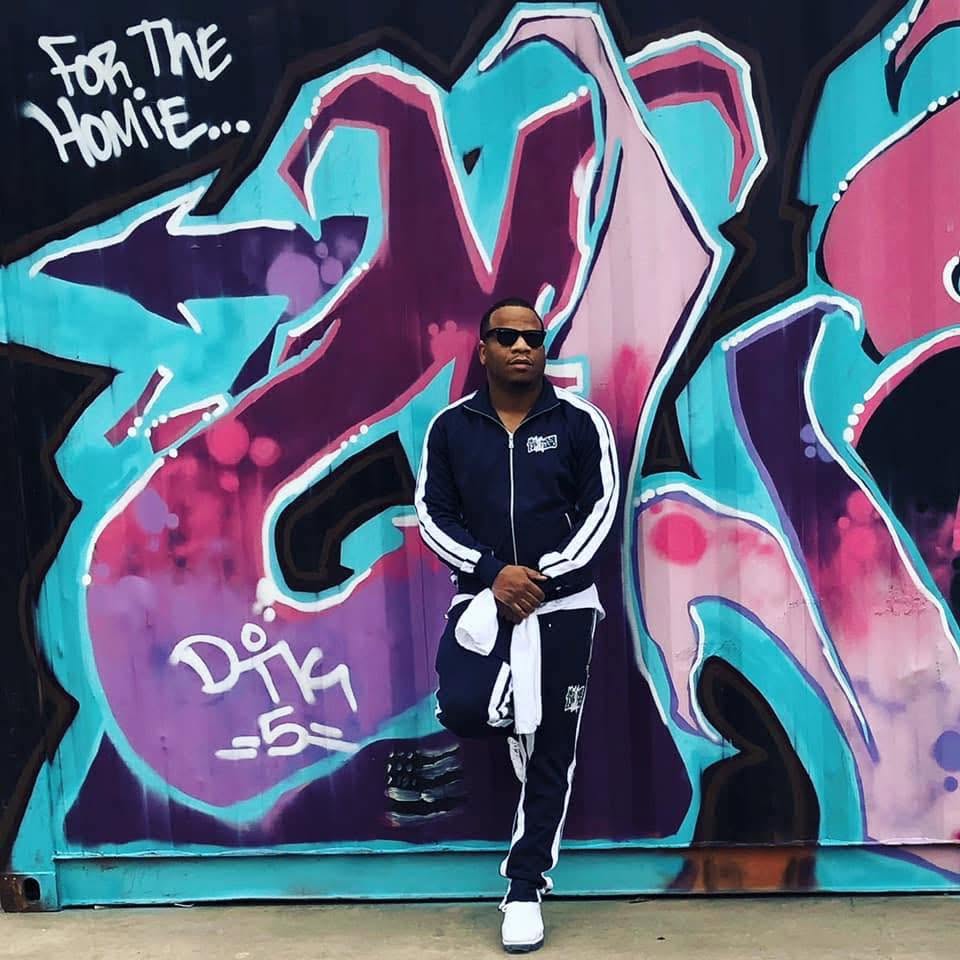
DJ Rally came up in exactly that world. A product of the LiveMixtapes era, he built his name on the college party circuit and the local promoter scene around Indiana University in Bloomington — the ecosystem of parties, promoters, and word-of-mouth that decides what a campus actually listens to on a Friday night. This is a different discipline than radio curation. The party DJ does not have the luxury of a quiet 2 a.m. slot to break an experimental record. He reads the room in real time, blends what the crowd knows with what he wants them to know next, and lives or dies by whether the floor stays full.
That promoter-and-party world rarely gets written about the way radio does, but it is arguably more influential on a college campus. The records that broke in those rooms — the ones a DJ like Rally would ride all semester — became the soundtrack of a generation of students who never once tuned into the FM dial. The party circuit is the grassroots of music discovery, and the DJs who run it are tastemakers in the most literal sense: they make the taste of the room.
When a college signal could launch a career
If the party circuit is where music spreads, college radio is where it has historically been discovered — and at its peak, a single college show could change the entire industry.
Stretch & BobbitoWKCR · Columbia University · New York City
The definitive example. Stretch Armstrong and Bobbito García ran a late-night show on Columbia University's WKCR that became the most important hip-hop radio program in the country. They introduced the world to Jay-Z, Eminem, and the Fugees before they were signed. Bobbito, a Wesleyan graduate, was working at Def Jam when the show started — and would lift unreleased demo tapes out of Def Jam co-founder Russell Simmons' office and play them on air.
"We were two fans on the radio in New York City. The mecca of hip-hop. And they let us on the radio."
What made it work was the freedom. Stretch has said they had station directors who gave them a long leash, and that they never thought of themselves as experimental — they were just trying to be dope. That is the college radio advantage in its purest form: no playlist, no consultants, no market research. Just two people with taste and a signal, deciding what mattered.
KygoKyrre Gørvell-Dahll · From college student to Coachella
A more recent, and very different, version of the same come-up. In 2014, Norway's Kyrre Gørvell-Dahll was a 22-year-old college student whose tropical house remixes were gaining traction on Hype Machine and SoundCloud. Within a year, he was signed to a major-label Sony deal with marquee bookings at Coachella, Ultra, and Lollapalooza. Kygo never needed a radio tower — his "station" was the internet — but the principle is identical to Stretch & Bobbito: a student with a distinct sound, finding an audience before the industry caught up. The platform changed. The path didn't.
The students keeping it alive right now
College radio never died — it just stopped being the only game in town. And in an era of algorithm fatigue, a new generation of student DJs is rediscovering exactly why human curation matters. These are three of them, on air today.
DJ Celica (Sully Gould)Radio K · KUOM · University of Minnesota
A junior at the University of Minnesota, Sully Gould — on air as DJ Celica — is known for his "all-vinyl Friday" shifts at Radio K, about as old-school as you can get for a modern station. In a single shift he might play Jim Croce, Robert Plant, the Ray Charles Singers, and Herbie Hancock, pulling from the station's library of roughly 18,000 CDs and a deep vinyl collection. Radio K's listenership grew a reported 195 percent between early 2023 and late 2025 — proof that the appetite for human-curated, genre-agnostic radio is not nostalgia. It is demand.
Vaughn De La CruzWUMC · Milligan University · Tennessee
A freshman at Milligan University, Vaughn De La Cruz hosts "Blast From the Past," a show built entirely from records in his personal collection, spanning the 1950s through the 1970s. He was selected to represent his award-winning station on the College Radio Foundation's national "Vinyl Radio" broadcast. His mission — focusing on the timeless sound of that era and the songs that reflect the roots and evolution of modern popular music — is the same instinct that drives DJ Celica: dig into the past, and play it for people who weren't there.
DJ Goof (Blake Brabo)KPSU · Portland State University · Portland, OR
Host of "Hectic Eclectic" on Portland State's freeform KPSU, Blake Brabo — DJ Goof — represents the experimental edge of current college radio. His picks run toward textural, genre-defying sounds like the "freak-folk" he championed in recent college radio tastemaker coverage. KPSU has imposed no restrictions on its volunteer DJs since it came on air, and as you'd expect, it often helps "keep Portland weird." That freedom is the through-line connecting Goof back to Stretch & Bobbito thirty years earlier.
One job, many rooms
From DJ Rally reading an Indiana house party, to Stretch & Bobbito breaking Jay-Z off a Columbia signal, to a freshman at Milligan spinning 1950s vinyl for people born in 2006 — it is all the same job. The college DJ decides what the campus hears, and in doing so, decides a little of what the culture hears next. The platforms change. The rooms change. The instinct — play it because it's good, and trust the crowd to feel it — never does.